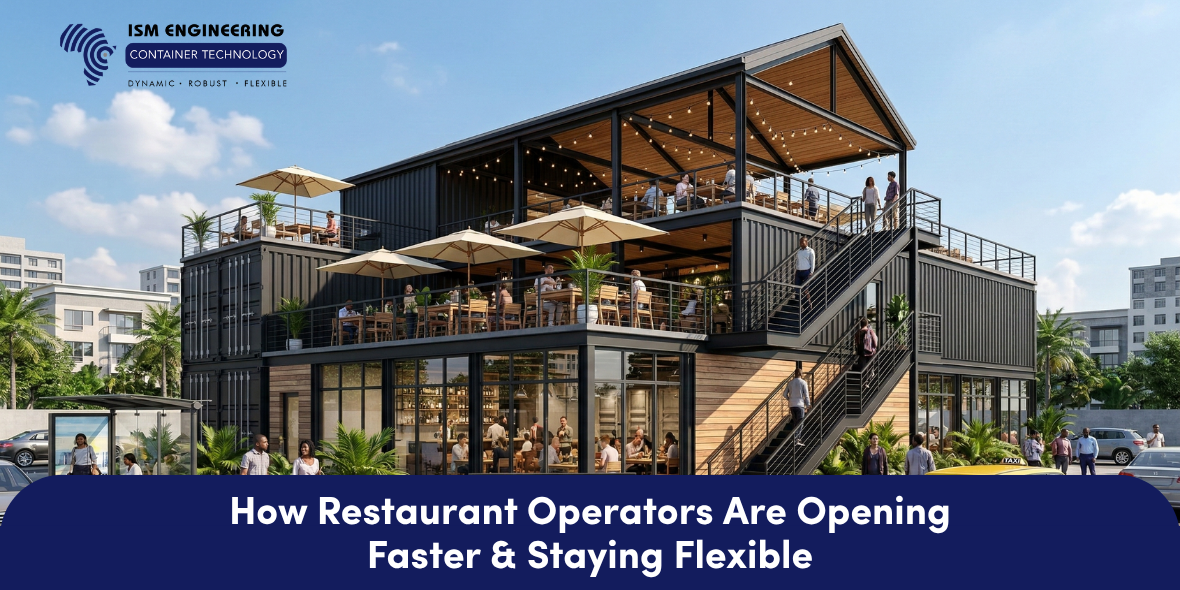
Not every restaurant project needs the same kind of build. Some sites justify a conventional approach. Others need a build that can open faster and adapt more easily if the business changes.
More operators are taking container restaurants seriously because they can open faster and stay more flexible once the site is open.
A Shorter Path to Opening
A conventional restaurant build usually happens in stages. Design is approved. Site work starts. Different contractors come in at different points. Changes happen. Timelines move.
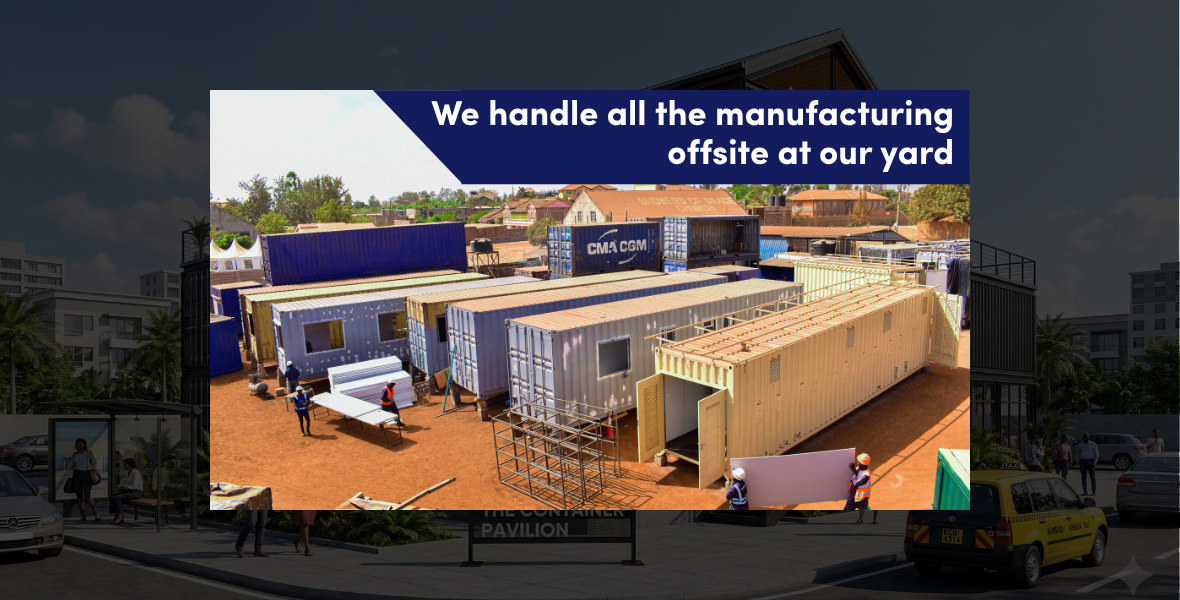
A container-based build works differently. Much of the structure can be fabricated off-site while the site is being prepared. That can shorten the time between project approval and opening day. It also means the business can start earning sooner, which matters on any site where time affects the return.
You Are Not Locked Into the Site in the Same Way
Location risk is part of the restaurant business. A site can look promising at the start and still underperform once you open.
With a fixed build, recovering from that decision is harder. With a container restaurant, the investment is not tied to the site in the same way. If the location stops working, the structure can be relocated. For operators entering a new area, testing a concept, or expanding in stages, that changes the level of risk.
It Still Has to Work as a Restaurant
Speed is only useful if the finished space works properly.
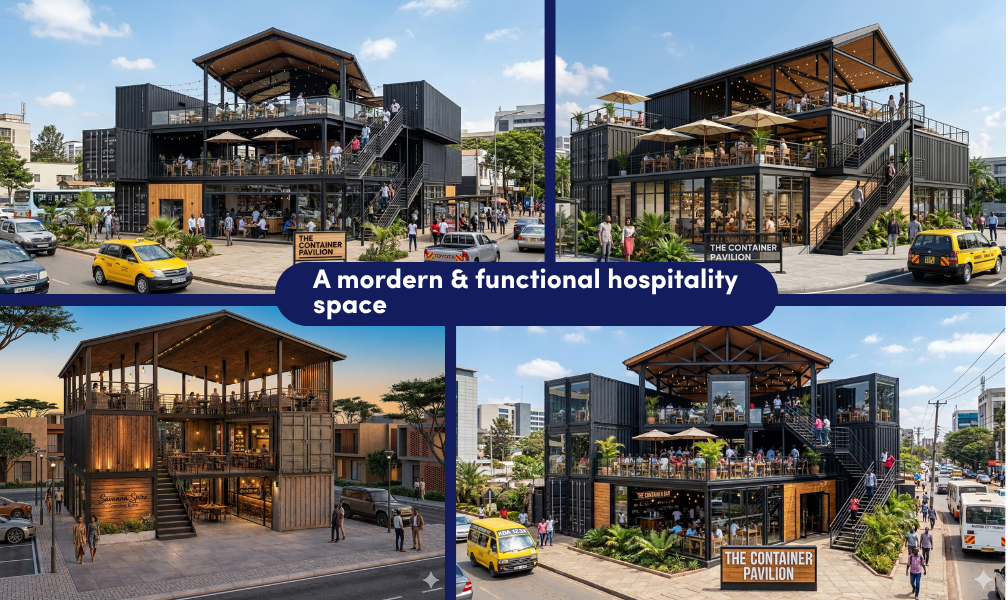
A container restaurant still has to function as a serious hospitality space. The kitchen has to support service. Customer flow has to make sense. Seating, ventilation, finishes, and layout all have to hold up in daily use.
That can include:
- Full commercial kitchens designed for daily service
- Bar fit-outs and dining areas finished to a premium standard
- Multi-level configurations with terrace and rooftop seating
- Custom facades, cladding, and interiors aligned to the business
The customer is not thinking about how the structure was built. They are responding to the space they walk into.
Expansion Is Easier to Phase
For operators planning more than one site, this also changes how growth can work.
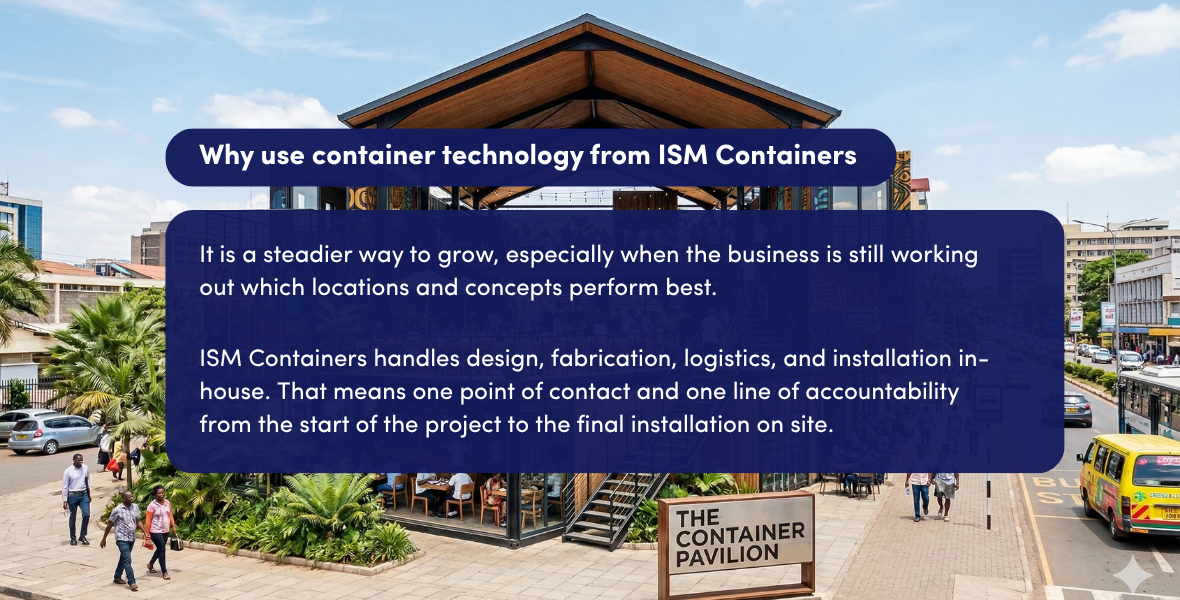
Instead of committing heavily at the start, a business can open one location, see how it performs, and expand once the case is clear. That might mean adding capacity, adjusting the layout, or using the same approach for the next site. It is a steadier way to grow, especially when the business is still working out which locations and concepts perform best.
One Team Handles the Whole Build
Restaurant projects lose time when responsibility is split across too many parties. Design sits with one team. Fabrication with another. Logistics and installation with someone else. The client ends up managing the gaps.
ISM Containers handles design, fabrication, logistics, and installation in-house. That means one point of contact and one line of accountability from the start of the project to the final installation on site.
For restaurant operators, that matters. The goal is not just to complete a build. The goal is to get a site open and working the way it should.
Not Every Site Needs a Permanent Build
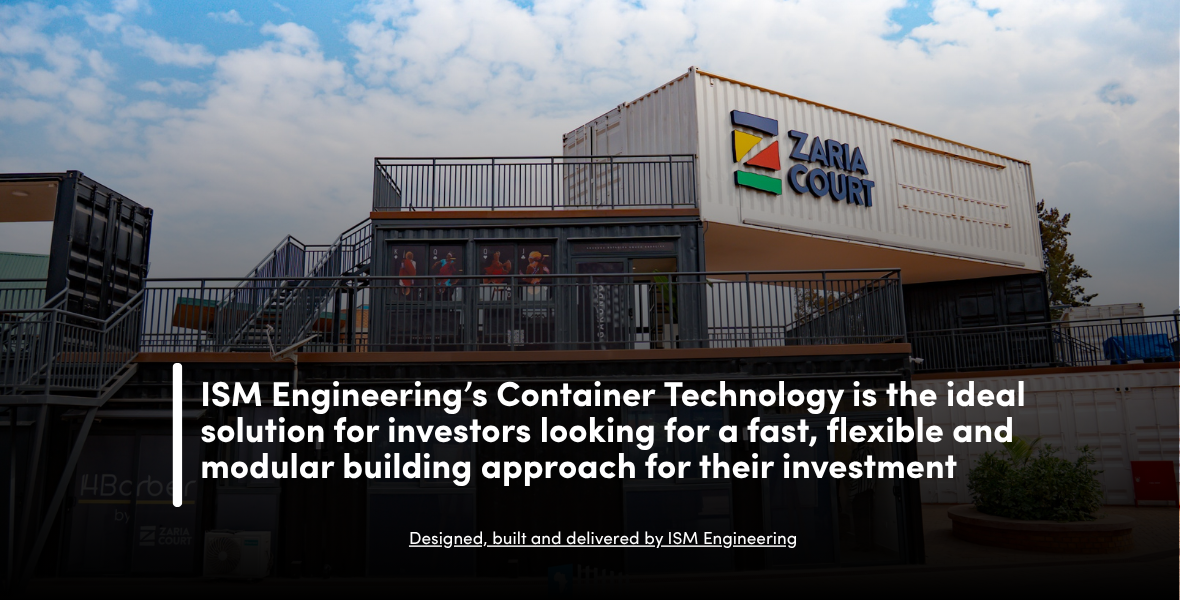
Some restaurant sites need permanence from day one. Others need speed, flexibility, and a build approach that leaves room to adjust once the business is open.
That is where container restaurants make sense.
Call +254 797 968 817 or email info@ismcontainers.com to explore the right layout, size, and build approach for your restaurant project.